Translate

sábado, 7 de octubre de 2017

Près du tiers de la population de l’humanité est encore dirigé par les carcans des partis communistes


« Le communisme, 1917–2017 », le nouveau livre de Bernard Antony
Par Infos Toulouse 


Bernard Antony, président de l’AGRIF, a choisi Octobre 2017 pour publier son nouveau livre événement : « Le communisme, 1917–2017 », édité chez Godefroy de Bouillon. Un bilan d’un siècle de régimes communistes, cent ans après la Révolution russe d’octobre 1917. Bernard Antony a bien voulu répondre aux questions d’Infos-Toulouse.

Infos-Toulouse. Votre livre « Le communisme, 1917–2017 » sort dans quelques jours. Pourquoi avoir voulu écrire ce livre ?

Bernard Antony : Il y a une immense littérature sur le communisme avec de très grands écrivains et pour ne citer que lui, ce géant que fut Soljenitsyne. Mais en cette période où s’impose le bilan de cent ans de communisme, j’ai voulu proposer, comme je l’ai fait pour l’islam, un livre de vaste synthèse mettant en avant la constante de mécanismes identiques dans tous les régimes communistes et notamment ceux de la Tchéka et du Goulag.
Mon livre vient vingt ans après l’excellent « Livre noir du communisme » mais en effet le communisme a continué et continue. Je propose un texte plus court et que j’espère d’une lecture aisée notamment pour les étudiants et plus jeunes en général.
J’y ai fait passer aussi le fruit de mon expérience personnelle du communisme à la fois dans notre région et dans un certain nombre de pays.

IT. L’idéologie communiste est présentée comme différente et variée selon les régimes. Staline, Mao, Polpote, Kim Jong Un ou Chavez sont-ils les mêmes ?

BA : L’idéologie communiste est fondamentalement la même dans tous les pays tombés sous les carcans du parti communiste. Mais évidemment les personnages monstrueux à les diriger ne sont pas exactement les mêmes. Un peu comme dans les démons de l’enfer il y a une hiérarchie dans la monstruosité. Mais Staline, Mao, Ho Chi Minh, Pol Pot et tant d’autres sont tous des enfants de Lénine, en quelque sorte « le père de la Trinité du mal » (Lénine, Trotski, Staline) selon l’expression de Vladimir Volkoff.
Et comme l’écrivait Dimitri Stolypine, l’écrivain, fils du grand ministre du tsar, Piotr Stolypine, assassiné en 1911 : « Chaque époque et chaque régime du communisme apporte son « style » particulier dans la répression massive ».

IT. Vous parlez de mémoricide, pourquoi l’Occident a t-il tant de mal à mettre en lumière les crimes issu du communisme ?

BA : Je pense que cela tient essentiellement au fait que Staline, après avoir amplement collaboré avec son mentor Hitler, a été attaqué par celui-ci le 22 juin 1941 et s’est ensuite retrouvé dans le camp des vainqueurs et surtout toute une intelligentsia communiste, ou anciennement communiste mais sans grande repentance, est demeurée très influente dans les médias, la culture et l’éducation.

IT. Quel bilan peut-on tirer du communisme après un siècle d’existence ?

BA : Brutalement, c’est pour le moins celui de cent millions de morts, massacrés souvent dans des atrocités inimaginables mais c’est aussi celui des milliards de victimes des peuples asservis.

IT. Où en est le communisme aujourd’hui ?

BA : On oublie trop souvent que près du tiers de la population de l’humanité est encore dirigé par les carcans des partis communistes en Chine, en Corée du Nord, dans les trois pays d’Indochine. Et il ne faut pas oublier Cuba…
Mais surtout le communisme en Occident a donné naissance à des virus mutants et avec l’AGRIF je m’emploie à démontrer que l’idéologie appelée antiracisme est l’aboutissement le plus parfaitement raciste qui soit de la haine nihiliste du communisme de tout ce qui fait l’identité humaine : religion, famille, patrie, culture. C’est la haine de l’enracinement en général dont la grande philosophe et mystique Simone Weil (à ne pas confondre avec Simone Veil !) a mis en relief l’importance pour la personne humaine.
Lorsque, comme moi on se déplace beaucoup en voiture, pouvant ainsi écouter nombre de radios, on mesure combien nombre d’émissions sont animées par tout un réseau de néo-communistes.

IT. Comment expliquer l’occultation des crimes commis par les milieux de l’enseignement, la culture et les médias ?

BA : Justement, pour la raison que je viens d’invoquer. Et c’est ainsi que fonctionne toute une connivence de désinformation négationniste et mémoricide mettant d’autant plus en avant sans cesse les abominations du nazisme, pour occulter celles du communisme. Comme si, selon la juste expression du grand historien Pierre Chaunu, Hitler et Staline n’avaient pas été des jumeaux hétérozygotes. Comme si la Gestapo et le système des camps de la mort du nazisme n’avaient pas été formés avec les instructeurs de la Tchéka et du Goulag, obligeamment prêtés à Hitler par Staline.

............


The 100th anniversary of the Russian Revolution: how could it be that the lesson has not been learned?


As the Left Surges Back, Marxism’s Bloody Legacy is Covered Up


by Roger Scruton, senior fellow at the Ethics and Public Policy Center.


As we approach the 100th anniversary of the Russian Revolution, it is fitting to ask whether we have learned what it tells us about its ideological root. 
  • Do we now appreciate that the Marxist ideology destroys legal order, political opposition and human rights? 
  • Do we have some idea of the death toll that has in every case followed the triumph of the ‘vanguard party’? 
  • Do we have an inkling of the human cost of collectivisation, or of what the gulag meant in terms of the humiliation and destruction of its victims?
Of course the answer in each case is no. 

Our school curriculum dwells incessantly on the Holocaust. Several states have made denial of it into a crime, and museums and monuments to the victims of Nazism and fascism exist all across the continent. But communism’s millions of victims are remembered hardly at all. 

One standard history of modern times, widely used in our schools, praises the Russian Revolution as aiming at ‘the complete destruction of the Russian and European bourgeoisie’, necessary for ‘the victory of socialism’. This history (Eric Hobsbawm’s Age of Extremes) does not mention the abolition of the law courts, or the establishment of the Cheka (the secret police), or the vicious expropriations that destroyed the Russian economy, or the mass starvation inflicted on the Ukrainian peasants. 

It is inadmissible for a historian to write in any but disgusted terms of the Nazi destruction of the Jews; but the equally cruel ‘destruction of the bourgeoisie’ can be described in terms of unqualified approval.

The term ‘bourgeoisie’ is a technicality of the Marxist theory. But it has a real human reference, and that reference is you and me. We who own property, deal in markets, collect salaries, have spouses and children, and live by the ordinary day-to-day morality of neighbourliness, are the people whom Lenin set out to destroy. We are the targets of resentment, and Marxism is the theory of that resentment.

One thing we should surely learn from the Russian revolution is that resentment is always on the lookout for the theories that will justify it. And the lesson that bore in on me in vivid and unforgettable ways during my own journeys behind the Iron Curtain, is that resentment, when it finally takes power, spells the death of politics. 

The real purpose of politics is not to express resentment but to contain and conciliate it. When, in the wake of the Grenfell fire, leading political figures began calling for a ‘day of rage’, and for the requisitioning of bourgeois property, I heard again the voice of that old resentment. And I asked myself how could it be that the lesson has not been learned?

The problem is not a lack of literature. Invocations of communist terror abound, and include masterpieces that all educated people should know, such as Koestler’s Darkness at Noon, Pasternak’s Doctor Zhivago and Solzhenitsyn’s Gulag Archipelago. However, resentment easily overrides the evidence. Just as anti-Semitism has survived constant reminders of the Holocaust, so does the Marxist vision survive the accumulated testimony to its murderous legacy. Resentful people cherish their hatred more than they respect the rights of those who arouse it.

For this reason it is surely time to establish museums devoted to the Marxist legacy. We have a model, indeed, in the House of Terror, established in Budapest in 2002 under the directorship of Maria Schmidt. This commemorates the victims of both fascism and communism, and has been controversial for that very reason. Even in Hungary, leftist intellectuals tell us that the two evils cannot be compared, and that to commemorate their victims in a single museum is to deny their most important difference: that the aims of communism were good, those of fascism bad. It is precisely in order to counter that kind of apology that Maria Schmidt has turned the same light on both ideologies. The aim of both, she insists, was the same. What difference does it make that one focused its resentment on the Jews, the other on the bourgeoisie, when the primary aim was in both cases the mass murder of their victims? Or do we say, with Eric Hobsbawm, that in the one case, but not in the other, the end justified the means?

As the Momentum movement seduces more and more people towards historical oblivion and utopian exultancy, the need for a programme of public education about these matters is ever more urgent. But I fear that it may be too late.


Source: eppc.org/


On the literary works of Russian author Aleksandr Solzhenitsyn


Solzhenitsyn’s cathedrals


Aleksandr Solzhenitsyn
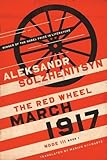
March 1917: The Red Wheel, Node III, Book 1 (The Center for Ethics and Culture Solzhenitsyn Series)
University of Notre Dame Press, 672 pages, $39.00


In Russia, history is too important to leave to the historians. Great novelists must show how people actually lived through events and reveal their moral significance. As Aleksandr Solzhenitsyn explained in his 1970 Nobel Prize lecture, literature transmits “condensed and irrefutable human experience” in a form that “defies distortion and falsehood. Thus literature . . . preserves and protects a nation’s soul.”

The latest Solzhenitsyn book to appear in English, March 1917, focuses on the great turning point of Russian, indeed world, history: the Russian Revolution.1 Just a century ago, that upheaval and the Bolshevik coup eight months later ushered in something entirely new and uniquely horrible. Totalitarianism, as invented by Lenin and developed by Hitler, Stalin, Mao, Pol Pot, and others, aspired to control every aspect of life, to redesign the earth and to remake the human soul. As a result, the environment suffered unequaled devastation and tens of millions of lives were lost in the Soviet Union alone. Solzhenitsyn, who spent the years 1945 to 1953 as a prisoner in the labor camp system known as the Gulag archipelago, devoted his life to showing just what happened so it could not be forgotten. One death is a tragedy but a million is a statistic, Stalin supposedly remarked, but Solzhenitsyn makes us envision life after ruined life. He aimed to shake the conscience of the world, and he succeeded, at least for a time.

In taking literature so seriously, Solzhenitsyn claimed the mantle of a “Russian writer,” which, as all Russians understand, means much more than a writer who happens to be Russian. It is a status less comparable to “American writer” than to “Hebrew prophet.” “Hasn’t it always been understood,” asks one of Solzhenitsyn’s characters, “that a major writer in our country . . . is a sort of second government?” In Russia, Boris Pasternak explained, “a book is a squarish chunk of hot, smoking conscience—and nothing else!” Russians sometimes speak as if a nation exists in order to produce great literature: that is how it fulfills its appointed task of supplying its distinctive wisdom to humanity.

Like the church to a believer, Russian literature claims an author’s first loyalty. When the writer Vladimir Korolenko, who was half Ukrainian, was asked his nationality, he famously replied: “My homeland is Russian literature.” In her 2015 Nobel Prize address, Svetlana Alexievich echoed Korolenko by claiming three homelands: her mother’s Ukraine, her father’s Belarus, and—“Russia’s great culture, without which I cannot imagine myself.” By culture she meant, above all, literature.

Solzhenitsyn was of course aware that, even in Russia, not all writers take literature so seriously and many regard his views as hopelessly unsophisticated. He recalls that in the early twentieth century, the Russian avant-garde called for “the destruction of the Racines, the Murillos, and the Raphaels, ‘so that bullets would bounce off museum walls.’ ” Still worse, “the classics of Russian literature . . . were to be thrown overboard from the ship of modernity.’ ” With such manifestoes the avant-garde prepared the way for the Revolution, and, when it happened, were at first accepted “as faithful allies” and given “power to administrate over culture” until they, too, were thrown overboard. For Solzhenitsyn, a great writer cannot be frivolous, still less a moral relativist, but must believe in and serve goodness and truth.

Naturally, Solzhenitsyn expressed contempt for postmodernism, especially when it infected Russians. After the Gulag, he asks, how can anyone believe that evil is a mere social construct? Such writers betray their tradition: “Yes, they say, Communist doctrines were a great lie; but then again, absolute truths do not exist anyhow . . . . Nor is it worthwhile to strive for some kind of higher meaning.” And so, “in one sweeping gesture of vexation, classical Russian literature—which never disdained reality and sought the truth—is dismissed as worthless . . . . it has once again become fashionable in Russia to ridicule, debunk, and toss overboard the great Russian literature, steeped as it is in love and compassion toward all human beings, and especially toward those who suffer.”...............

Among Solzhenitsyn’s many works, two great “cathedrals,” as one critic has called them, stand out, one incredibly long, and the other still longer. His masterpiece is surely the first cathedral, his three-volume Gulag Archipelago: An Experiment in Literary Investigation. I suspect that only three post-Revolutionary Russian prose works will survive as world classics: Isaac Babel’s Red Cavalry, Mikhail Bulgakov’s The Master and Margarita, and Solzhenitsyn’sGulag. For that matter, Gulag may be the most significant literary work produced anywhere in the second half of the twentieth century.


.............


The Gulag was the product of the Revolution, but why was there a Revolution? Solzhenitsyn’s second “cathedral,” the multi-volume novel The Red Wheel, attempts to answer that question. The title comes from a passage in which Lenin, during his exile in Zurich, sees a train whose engine had “a big red wheel, almost the height of a man.” Interpreting the train’s relentless power as a symbol of merciless historical inevitability, Lenin thinks:

All the time, without knowing it, you were waiting for this moment, and now the moment had come! The heavy wheel [of history] turns, gathering speed—like the red wheel of the engine—and you must keep up with its mighty rush. He who had never yet stood before the crowd, directing the movement of the masses, how was he to harness them to that wheel?

The Red Wheel consists of four long “knots,” or, as Marian Schwartz prefers, “nodes.” Like Tolstoy’s War and Peace, each volume includes both fictional characters and real historical figures, along with non-fictional essays by the author. Solzhenitsyn also adds countless authentic documents: letters between Nicholas and Alexandra, transcripts of debates in the Duma (the nascent Russian parliament), and a letter from Rasputin to the Tsar warning against war. We read “screens” or instructions for how a scene could be filmed. In the historical sections, the author sometimes switches to small print to indicate strict adherence to fact, with no admixture of imaginative reconstruction. Introducing one sixty-page small-print section, the author suggests that “only the most indefatigably curious readers immerse themselves in these details” while the rest might skip “to the next section in larger print. The author would not permit himself such a crude distortion of the novel form if Russia’s whole history, her very memory, had not been so distorted in the past, and her historians silenced.” Tolstoy insisted that War and Peace belonged to no recognized genre but was simply “what the author wished to express and was able to express in that form in which he expressed it,” and Solzhenitsyn advances much the same claim. Formal experimentation never occurs for its own sake.

Hugh Hefner: sometimes it’s appropriate to speak ill of the dead


The Human Costs of the World Hugh Hefner Created

by Katrina Trinko


Sometimes it’s appropriate to speak ill of the dead.

Playboy founder Hugh Hefner died Wednesday, aged 91. But his work of mainstreaming porn will likely live on—and continue to hurt men and women—for many years to come.

Playboy helped usher in an era of porn addiction, decreased happiness, and strained relationships between men and women.

Porn did of course exist before Hefner, and the internet—a technological innovation Hefner had nothing to do with—greatly accelerated the use of porn.

But what Hefner did was to bring porn out of the shadows, to make it something that could be discussed openly and without shame. Decades before the characters on “Friends” were cracking jokes about porn use, Hefner planted the seeds by creating Playboy magazine.

This article from ABC News shows how revolutionary Playboy was:
In 1953, a time when states could legally ban contraceptives, when the word ‘pregnant’ was not allowed on ‘I Love Lucy,’ Hefner published the first issue of Playboy, featuring naked photos of Marilyn Monroe (taken years earlier) and an editorial promise of ‘humor, sophistication and spice.’
…
Within a year, circulation neared 200,000. Within five years, it had topped 1 million.
By the 1970s, the magazine had more than 7 million readers and had inspired such raunchier imitations as Penthouse and Hustler.

Porn, proponents say, is just a harmless foray into fantasy. That might have been credible in 1953.

But now, 64 years after Playboy was launched, it’s clear that’s just not the case—and there are real human costs to our society’s porn addiction.

Thirty-eight percent of heterosexual men and nearly 7 percent of heterosexual women admit to viewing porn in the past six days, according to data in University of Texas at Austin sociology professor Mark Regnerus’ new book “Cheap Sex.”

Viewing porn can definitely have consequences for real-life behavior. One interviewee Regnerus spoke to, a 24-year-old name Jonathan from Austin, Texas, said of porn use during relationships: “It’s just an unfulfilling cycle. It’s stressful … you become dissatisfied sexually with the person you’re with. How can you not?”

Another interviewee, 27-year-old Alyssa from Milwaukee, said, “I can see in myself the effect that watching porn has had on me.”

“I know,” she added, “that I feel a little bit sexier when I’m having sex like a porn star … porn sex is not, like I said, not romantic, and it’s not, like, it’s not slow. It’s not seductive, it’s much more about um, like the thrusting and the grunting than the touching and the sighing, you know. The gentle loving aspect is not hot.”

Regnerus’ data also shows a correlation (hardly shocking) between frequency of masturbation and porn viewing, suggested increase porn use spurs more frequent masturbation.

That’s unfortunate: “The Relationships in America survey data reveal that those who masturbated recently were less likely to be happy with life in general—and less happy with their current romantic relationship—than those who had not,” writes Regnerus.

There’s also evidence that porn use can become compulsive, perhaps even addictive. In other words, porn isn’t just viewed by men or women deciding it’d be fun—it’s people feeling driven to do so.

A 2010 report, “The Social Costs of Pornography,” by the Witherspoon Institute, a conservative research center in Princeton, New Jersey, found that “internet pornography does evoke in some users those behaviors that clinical and psychological literature calls ‘addiction,’ just as in the cases of addiction to alcohol, nicotine, and other substances. The addiction to pornography can even become ‘compulsive,’ meaning that it continues despite negative consequences to a person’s functioning in his or her work or relationships.”

Personal accounts bear this out as well. In 2016, Time reported on Alexander Rhodes, the nonreligious man behind a crudely named site and movement to encourage men to stop watching porn.

Rhodes, who first saw porn at 11, quickly began viewing porn with greater frequency. “By the time he was 14, he says, he was pleasuring himself to porn 10 times a day. ‘That’s not an exaggeration,’ he insists. ‘That, and play video games, was all I did,’” wrote Time’s Belinda Luscombe.

And once again, porn didn’t stay on the computer or in the fantasy world, but extended to Rhodes’ relationship with a girl, as Time reported:
In his late teens, when he got a girlfriend, things did not go well. ‘I really hurt her [emotionally],’ says Rhodes. ‘I thought it was normal to fantasize about porn while having sex with another person.’ If he stopped thinking about porn to focus on the girl, his body lost interest, he says.
Rhodes isn’t alone. Isaac Abel (a pen name) wrote in liberal website Salon in 2013 about the effects of his porn habits.

Like Rhodes, Abel started watching porn at a young age. He also started watching more and more extreme porn, including rape and cartoon porn. And it affected his real-life relationships:
I starting seeing a young woman regularly, and some confluence of alcohol, weed, no condom, and the trust, comfort, and affection I felt with her allowed me to start enjoying sex—to an extent. I wouldn’t acknowledge it, but the majority of nights I had ‘good sex’ I was intoxicated. And, what’s worse, I was fantasizing about porn during sex.
It was a dissociative, alienating, almost inhuman task to close my eyes while having sex with someone I really cared about and imagine having sex with someone else or recall a deviant video from the archives of my youth that I was ashamed of even then.
Is this really happiness?

.............


If we wish to avoid the horrors of the last century, we need to persuade people to see the past realistically, not romantically.


by Thomas Storck
Just as the practical arts have recognized social purposes, likewise the fine arts were understood before the last few centuries to have a social or public end or function. Take music, for example. Composers did not simply write a piece of music, they wrote music for use in divine worship, for dancing, for marching; painting and sculpture likewise had a social role and purpose: adorning churches, palaces, and public buildings. The same could be said in different ways of all the fine arts. Even theatrical performances, both in ancient Greece and medieval Europe, were integral parts of religious festivals, not free-standing presentations. Originally, this was true even of poetry, which was written chiefly for public recitation... 
[MORE]


by Paul Kuntz
The moral order of Jefferson was one of duties, as evidenced in a society that deprives the vast majority, ninety-eight percent say some studies, of the pleasure of gambling, because the opportunity may spell disaster for a small minority, two percent, who tend to become compulsive gamblers. Jefferson had observed the phenomenon as a young student at the College of William and Mary in Williamsburg, where he is said to have turned from gambling as a form of evil. The analogous problem of chronic drunkenness could lead to prohibition of spirits as it now does of cocaine, etc. Some sociologists, finding that pornographic literature triggers sexual violence, have argued that the duty of society to prevent crime justifies limitation upon freedom of expression. Thomas Jefferson would not belong to the present American Civil Liberties Union... 
[MORE]


by Joseph Pearce
The tragedy is that the rose-coloured spectacles are tinted with the blood of socialism’s forgotten victims. Seeing the blood-spattered past through such spectacles condemns the future to be as blood-spattered as the past. If we wish to avoid the horrors of the last century, we need to persuade people to see the past realistically, not romantically. We need to persuade them to remove the rosy spectacles so that they can see reality clearly. When they do so, when they see the blood of the millions of victims, we can only hope that the blood will rush to their own cheeks as they blush at the foolishness of their own blindness. Only such a revelation will cure such people of the desire for revolution... 
[MORE]


by Jacoby Sommer
We are on this earth for such a brief moment; let us not be lulled to sleep by any bedtime story, no matter how pleasant. We are on this earth for but one purpose. Let us preserve our lineage and defend the culture which birthed it; anything less is conspiring with the enemy. And who is the enemy? It is he who tells us that justice will conquer human nature, for justice itself is defined and redefined by immortal human nature. No matter how many times the story is told, Hector always loses to Achilles. This is because the story does not change; and it is also because Achilles is immortal. It is Homer we should thank for chronicling our heroic past; and it is to Homer we are indebted for showing us our future. But now is our moment of decision, now we must decide which path to take: fallen Hector or victorious Achilles... 
[MORE]


by Joseph Mussomeli
The genius of America is that it was founded upon faith-based secularism. Secularism is a strength and fertile ground for faith and morality. There is always something that must fill the vacuum of disbelief, and it usually is a multitude of lesser gods; race, nation, class, wealth, status, social causes, and perceived grievances are all elevated for worship. Muslims, for the most part, are far from this sterile humanism. Islam, arguably, may help undergird the faithlessness that now is western Europe, and may even trigger a resurgence in Christianity across this continent. Islam once helped save and preserve Western thought and culture a thousand years ago. Might it not do something similar this century, helping to bring us back to a more spiritual, still secularized, but less materialistic, epoch?... 
[MORE]


by George Stanciu
The image of God within us means that each one of us is unnamable and known to others through our activities in the world, that is, through a socially-constructed self. We are unknowable to ourselves, although through meditation, or what the Patristic Fathers called contemplation, we can witness our thoughts, memories, and storytelling, and thus know that we are not what we witness. Through more advanced contemplation, we may experience Divine Light, the presence of God. The Unnamable sustains all existence; the unnamable can apprehend, or mirror, all things. As long as we live on Earth, we are social beings and must have a self to interact with others, but we can live with the realization that the self is a fiction and not to be taken seriously. Our roles in this life are masks, not who we truly are...
[MORE]

14 octobre : colloque du comité Soljénitsyne sur "Cent ans d'abominations communistes"


"Cent ans d'abominations communistes"


Source: lesalonbeige.blogs.com


N'oubliez pas de vous inscrire au colloque du comité Soljénitsyne (avec le soutien du Salon beige), le 14 octobre prochain, sur "Cent ans d'abominations communistes".

C'est un devoir vis-à-vis des victimes passées et présentes de ce totalitarisme de ne pas les oublier et de commémorer à notre enfance le centenaire de la révolution d'octobre.

Voici le programme finalisé:

3 tables rondes

Introduction : Guillaume de Thieulloy

Les racines du communisme

La complaisance des intellectuels français pour le communisme : Stéphane Buffetaut
Nazisme et communisme : Didier Rochard

La terreur rouge

Terreur rouge et résistance : Bernard Antony
Résistance de la Pologne catholique : Marek Jurek
La terreur au Cambodge : Billon Ung Bun-Hor
Pourquoi j’ai quitté le Vietnam : Isabelle Thi Thuyet

Actualité du communisme

Le communisme tue toujours des chrétiens : Daniel Hamiche
Le « grand soir » par d’autres moyens : François Billot de Lochner
Le multiculturalisme, mutation du communisme : Jean-Pierre Maugendre

Un procès du communisme est toujours nécessaire : Bernard Antony

Et voici le lien pour vous inscrire: https://www.lesalonbeige.fr/colloque-communisme/

lunes, 2 de octubre de 2017

Houellebecq, en tant que sismographe, il enregistre toutes les secousses en rapport avec la tectonique des plaques civilisationnelles

Michel Onfray: « Michel Houellebecq a diagnostiqué l'effondrement spirituel de notre époque »

Par Alexandre Devecchio


FIGAROVOX/GRAND ENTRETIEN - A l'occasion de la parution de son dernier livre, Miroir du nihilisme, Houellebecq éducateur, Michel Onfray a accordé un entretien fleuve au FigaroVox. Il y décrypte la philosophie de l'auteur de Soumission


FIGAROVOX.- Vous publiez aux éditions Galilée, Miroir du nihilisme, un essai consacré à Soumission de Michel Houellebecq. Vous êtes longtemps passé à côté de l'œuvre de ce dernier. Pourquoi son dernier roman vous a-t-il fait changé de point de vue?


Michel ONFRAY.- J'avais aimé la performance littéraire d'Extension du domaine de la lutte qui était vif et bref, rapide et percutant. Les autres romans m'avaient paru techniquement moins rapides. J'aime les stylistes et les textes qui vont vite. Voilà pour la forme.


Soumission m'a plu parce qu'il renoue avec la vitesse d'Extension. Il m'a éloigné du doigt et ramené à la lune quand j'ai constaté chez Michel Houellebecq la grande souffrance qui était la sienne à se savoir, se voir, se constater, s'expérimenter corporellement et spirituellement tel un sismographe de notre époque en cours d'effondrement.Pour le fond, j'avais commis l'erreur de croire que le diagnosticien du nihilisme consentait au nihilisme, s'en réjouissait même, voire, s'y complaisait… C'était une erreur. C'est confondre le cancérologue qui diagnostique la pathologie avec le cancer, la pathologie qu'il a diagnostiquée. J'étais, selon l'image bien connue, l'imbécile qui regarde le doigt quand le sage lui montre la lune!

En termes hégéliens, il est le grand homme choisi par l'Histoire pour qu'il en fasse la narration. Il est au cœur nucléaire du processus de Ruse de la raison. Le savoir, ce qui est son cas, car il est d'une redoutable lucidité, c'est affronter les plus grands tourments.

En quoi Houellebecq est-il le romancier du nihilisme?

En tant que sismographe, il enregistre toutes les secousses en rapport avec la tectonique des plaques civilisationnelles: il a diagnostiqué l'effondrement spirituels des générations produites par des parents soixante-huitards, l'écœurement d'une sexualité indexée sur la seule performance, la marchandisation des corps et des âmes, des carrières et des pensées, la contamination de l'art contemporain par le snobisme et le marché, la tyrannie de l'argent en régime libéral, la fin de la France depuis l'abandon de sa souveraineté lors du Traité de Maastricht.

Mais aussi la veulerie du tourisme sexuel en Asie, le caractère inéluctable de l'engagement de nos

Depuis 1994, Michel Houellebecq dépèce minutieusement le Veau d'or - c'est en cela qu'il est le grand romancier du nihilisme occidental.civilisations occidentales vers le projet transhumaniste, l'effondrement de la religion judéo-chrétienne et des valeurs qui l'accompagnaient, et, avec Soumission, le processus de collaboration des élites avec les idéologies liberticides - ici un islam francisé.

Houellebecq s'inscrit volontiers dans la filiation d'Auguste Comte qui était positiviste…

Mais aussi de Schopenhauer - ou de Huysmans. Il n'est pas homme à s'enfermer dans des cases, à aimer l'un, donc pas l'autre, à choisir celui-ci, donc à écarter celui-là… Il est un homme authentiquement libre.

Ce qu'il aime chez Auguste Comte, c'est sa réflexion sur la place de la religion dans la société, sur la possibilité d'une liaison d'un certain type de sacré avec le social. Qui dira qu'il ne s'agit pas d'une question essentielle si l'on veut aujourd'hui penser la question politique?

Le positivisme n'est pas la philosophe un peu bêtasse de Monsieur Homais, mais la pensée mal connue d'un homme qui estimait que la religion sociologique des Hommes pouvait remplacer la religion théologique de Dieu.

La question de la religion est un leitmotiv dans la pensée de Michel Houellebecq: que faire dans un monde vidé de toute transcendance? Lui qui décrit dans le détail le désespoir qu'il y a à vivre dans un monde de pure immanence (ce qui n'est pas mon cas: je crois que la sagesse tragique permet de vivre dans la seule immanence sans désespoir…) , il est normal qu'Auguste Comte lui parle.

Votre livre est sous-titré Houellebecq éducateur. Comment peut-on être à la fois nihiliste et éducateur?

En enseignant la nature tragique du monde, autrement dit, en évitant deux choses: la lecture optimiste du monde et… la lecture pessimiste! L'optimiste voit le meilleur partout et ne veut pas entendre parler du pire ; le pessimiste voit le pire partout et ne veut pas entendre parler du meilleur.

Le tragique quant à lui sait qu'il y a du pire et du meilleur partout… Michel Houellebecq nous enseigne où est le pire, ce qui n'a pas besoin d'être démontré, mais aussi le meilleur - qui provient chez lui, paradoxalement, de Schopenhauer pour qui il existe des solutions à ce monde sombre dans la pitié et la contemplation esthétique.

N'oublions pas que Schopenhauer a aussi écrit un Art d'être heureux… On connaît sa vision du monde animal, elle est d'une grande compassion. Il y a dans sa conversation en tête à tête la même présence attentive à l'autre. On n'ignore pas non plus qu'il trouve dans l'art un sens à sa vie: il a produit des romans, des essais, des poèmes, des films, des photographies, des performances d'art contemporain…

En tant qu'il dit le monde tel qu'il est, sans faux-semblants, et qu'il vit une vie poétique sans l'imposer ou la conseiller à qui que ce soit, il invite chacun à construire sa propre existence dans un temps de détresse.

Beaucoup ont vu dans ‘Soumission' une critique de l'islam radical. Vous y voyez plutôt un grand roman de la collaboration. Qui sont les «collabos» d'aujourd'hui?

Certes, il existe un islam pratiqué par des gens qui voient en cette religion une coutume familiale ou un signe d'appartenance dans laquelle dominent effectivement la tolérance, la paix et l'amour.Ceux qui estiment que l'Islam est une religion de paix, de tolérance et d'amour et ne veulent pas entendre parler d'un Islam de guerre, d'intolérance et de haine.

Mais il y a aussi, dans le Coran et dans l'histoire de l'islam, terrorismes inclus, une autre voie qui est celle de la misogynie, de la phallocratie, de l'homophobie, de l'antisémitisme, du bellicisme, de la guerre qui constituent des valeurs à exporter par le djihad guerrier.

Le collaborateur ne veut voir que le premier islam en estimant que le second n'a rien à voir avec l'islam. Le Coran est un livre dont les sourates justifient aussi bien le premier que le second islam.

Concrètement, ces collaborateurs sont les islamo-gauchistes qu'on trouve ici ou là au NPA, dans la France

................


Lire la suite: www.lefigaro.fr