Translate

miércoles, 24 de octubre de 2018

Bruno de Saint Chamas et Marion Maréchal: l’Université d’Automne de Notre Dame de Chrétienté


Mais que va faire Marion Maréchal à l’Université de Notre-Dame de Chrétienté ?


Le 17 novembre, l’association Notre-Dame de Chrétienté, qui organise chaque année le pèlerinage de Pentecôte de Paris à Chartres, convie les pèlerins à une journée de formation. 

Le programme et les renseignements pour s’inscrire sont ici.

L’invité phare de cet évènement est l’ancien député Marion Maréchal. 

Pour en savoir plus, nous avons interrogé Jean de Tauriers, président de l’association :

Notre Dame de Chrétienté qui rassemble près de 13 000 pèlerins sur la route de Chartres organise prochainement son université d’Automne. Pourquoi cette université ?

Notre Dame de Chrétienté réunit également ses amis lors de diverses activités tout au long de l’année : vie des chapitres, retraites, formations, vidéo-formations, récollections,… et parmi celles-ci l’Université d’Automne est le grand moment du second semestre, cette année le 17 novembre au forum de Grenelle (5 Rue de la Croix Nivert dans le XVème). Cette Université a trois objectifs : entretenir l’esprit d’amitié de la grande famille des pèlerins, préparer le pèlerinage 2019 mais aussi approfondir avec des intervenants extérieurs certains sujets.

Vous avez cette année deux invités de prestige, Bruno de Saint Chamas et Marion Maréchal : pourquoi ?

Le thème de 2019 a été annoncé le lundi de Pentecôte dans la cathédrale de Chartres devant le cardinal Sarah, moment inoubliable pour beaucoup d’entre nous. Il reprend les premiers mots de l’encyclique Quas Primas de Pie XI (1921) sur la royauté sociale de Notre Seigneur Jésus-Christ « La paix du Christ par le règne du Christ ». Cette doctrine n’est plus enseignée ni comprise aujourd’hui, comme abandonnée d’abord par lassitude puis par ignorance.

Nous allons vivre un temps de reconquête qui ne réussira que si nos intelligences ont fait l’effort du travail intellectuel. L’Université d’Automne de Notre Dame de Chrétienté veut nous aider dans cet effort, en nous rappelant l’importance de la royauté sociale de Notre Seigneur Jésus-Christ sur nos familles et nos sociétés. Nous sommes « de chrétienté » pour faire régner le Christ Roi !

L’Eglise enseigne les sociétés avec sa doctrine sociale ; elle nous propose des principes de réflexion, des critères de jugement, des orientations pour l’action. Bruno de Saint Chamas, président d’ICHTUS, nous expliquera toute son importance et son actualité.

Rémi Fontaine, l’un de nos fondateurs, rappelle dans son dernier livre (Itinéraire de chrétienté avec Jean Madiran, Presses de la Délivrance) ces mots de Charles Péguy au cœur de la vocation de Notre Dame de Chrétienté « C’est un grand mystère, il ne suffit pas d’avoir la foi. Nous sommes faits pour vivre notre temporel en chrétienté ». Ce sera un des thèmes de réflexion de l’Université d’Automne.

La présence de Marion Maréchal, ancien député, n’est-elle pas un mélange des genres ?

Nous avons cette année un thème de formation. Il nous a semblé naturel d’inviter deux de nos pèlerins responsables d’une activité de formation.

Marion Maréchal est non seulement Directrice Générale d’un nouvel Institut de sciences sociales mais aussi, depuis plusieurs années, une fidèle pèlerine. J’attends avec impatience sa rencontre dans le cadre d’un salon parisien (le forum de Grenelle) avec les pèlerins qui marchent avec elle tous les ans, qui la croisent sur la route, sous le soleil ou la pluie. Elle nous parlera des sujets qui lui tiennent à cœur : la France, la réforme intellectuelle, la jeunesse. Peut-être parlerons-nous un peu de politique… au sens noble du mot bien sûr, cela va sans dire.

Qu’attendez-vous de cette université ?

L’amitié entre des personnes d’horizons différents, de générations différentes. Vous n’avez pas besoin d’être des pèlerins endurcis ou d’avoir 20 ans pour venir à l’Université d’Automne ! L’Université d’Automne est ouverte à tous ceux qui s’intéressent à une œuvre catholique unique dans l’Eglise occidentale, une œuvre qui défend « mordicus » sa raison d’être : Tradition, Chrétienté, Mission.

Quelles sont les prochaines étapes de l’évolution du pèlerinage ?

Nous attendons la confirmation des célébrants 2019, je resterai encore discret sur ce sujet.

Le pèlerinage a changé de taille depuis quelques années. Comment adapter notre encadrement spirituel, comment adapter notre organisation matérielle à une colonne de près de 15000 pèlerins ? Tous nos projets tournent autour de ces préoccupations. Comment transmettre ce que nous avons reçu aux nouvelles générations ? Nous avons besoin de beaucoup de monde pour nous aider à tenir bon et nous comptons sur l’Université d’Automne pour en parler.


Centenaire de la naissance de Soljénitsyne


Alexandre Soljénitsyne la vérité comme exigence

L’Homme Nouveau publie en fin de semaine un hors série double sur Alexandre Soljénitsyne à l’occasion du centenaire de sa naissance.
Il est en pré-vente pour quelques jours, sans frais de port. C’est par ici, ne tardez pas.

Centenaire de la naissance de Soljénitsyne


https://youtu.be/IBRjtYZa-Ic


Source: www.lesalonbeige.fr

lunes, 22 de octubre de 2018

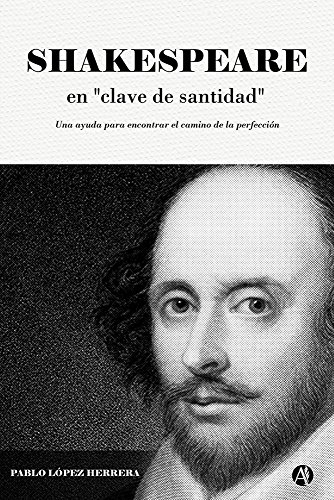
Shakespeare en "clave de santidad", una ayuda para encontrar el camino de la perfección

Shakespeare en "clave de santidad"
  
Una ayuda para encontrar el camino de la perfección

Por Pablo López Herrera


Shakespeare en clave de santidad (Spanish Edition) by [López Herrera, Pablo]


Índice detallado del ensayo


1. Intenciones y agradecimientos

http://santidadenshakespeare.blogspot.com/2018/10/1-intenciones-y-agradecimientos-del.html

2. Las obras de Shakespeare como mapas, y algunos "sherpas"


http://santidadenshakespeare.blogspot.com/2018/10/2-las-obras-de-shakespeare-como-mapas.html


3. Theodore Dalrymple, una visión antropológica de Shakespeare

http://santidadenshakespeare.blogspot.com/2018/10/3-theodore-dalrymple-una-vision.html

3.1. Shakespeare es un escritor universal.

3.2. La antropología nos muestra las "reglas del funcionamiento" del hombre

3.2.1. El respeto a los límites

3.2.2. En la tierra no existe "la felicidad", ni hay una solución definitiva a los problemas del hombre
3.2.3. "Macbeth" nos permite analizar la naturaleza humana
3.2.4. La importancia de la conciencia
3.2.5. El pecado es un acto de la voluntad
3.2.6. Cuando la ambición se convierte en el motor principal de la conducta "social"
3.2.7. El problema de la elección del mal por Macbeth es el mismo de todo ser humano.
3.2.8. En el fondo, la verdadera libertad está en aceptar las reglas del juego.

3.3. Macbeth no estaba predestinado a ser un criminal

3.3.1. Un héroe puede transformarse en villano

3.3.2. Un hombre que lleva una vida normal, puede deslizarse por la pendiente
3.3.3. Ni la cuna ni la fortuna ni el éxito son garantía de probidad
3.3.4. Las condiciones de vida siempre pueden parecer insuficientes
3.3.5. El resentimiento tampoco es el único origen de la maldad
3.3.6. Todo es poco para el que no se auto limita
3.3.7. La ambición de poder impulsa a Macbeth a actuar como lo hace
3.3.8. El papel de Lady Macbeth: la ambición insana se comparte y el traspaso de los límites no se hace en solitario...
3.3.9. El deseo de aparentar es muy fuerte
3.3.10. Macbeth sucumbe a la "presión social" representada en Lady Macbeth pero la "presión social" también puede ser ejercida para el bien
3.3.11. El límite entre el bien y el mal está en el interior de Macbeth, y de todos...
3.3.12. La conciencia de las faltas cometidas puede existir, pero no alcanza para la redención humana


4. El tema central en Macbeth: ¿es "la ambición" o "el pecado"? - El pecado en Macbeth

http://santidadenshakespeare.blogspot.com/2018/10/4-el-tema-central-en-macbeth-es-la.html


4.1. La curiosidad
4.2. La tentación
4.3. La duda y el deseo de rechazar el mal
4.4. Inclusión del mundo sobrenatural en la historia
4.5. Reconocimiento del servicio como misión y deber
4.6. Hay un momento en que la conciencia del pecado es plena
4.7. Como un pecado pude ser más grave aún
4.8. El disimulo como herramienta del pecador
4.9. Vacilación y consideración de las consecuencias del pecado
4.10. Arrepentimiento provisorio...
4.11. La importancia que le damos a la imagen que proyectamos
4.12. Preparación, ejecución del acto y consideración sobre el destino del alma de Duncan
4.13. El pecado y sus consecuencias en la vida terrenal
4.14. Consideraciones espirituales adicionales
4.15. Invocación adicional al reino de las sombras
4.16. Conciencia, aceptación y estado de pecado
4.17. Lady Macbeth: el pecado no es un desvarío mental involuntario
4.18. El final de Macbeth muestra la claridad de sus ideas
4.19. Macbeth reitera su voluntad de seguir matando, y se dispone a morir...
4.20. Nunca debemos perder la esperanza de salvarnos


5. Las virtudes del gobernante en Macbeth

http://santidadenshakespeare.blogspot.com/2018/10/5-las-virtudes-del-gobernante-en-macbeth.html


5.1. La intemperancia y la codicia en los dirigentes políticos tiene efectos sociales
5.2. Shakespeare destaca las virtudes de un buen rey
5.3. La fe estuvo alguna vez en las consideraciones de los dirigentes


6. El camino hacia la cumbre de Hamlet

http://santidadenshakespeare.blogspot.com/2018/10/6-el-camino-hacia-la-cumbre-de-hamlet.html
6.1. Una visión católica del mundo
6.2. Conociendo la misión en la vida
6.3. Hamlet toma una decisión, se plantea una estrategia, y avanza
6.4. Las dudas y la tribulación como compañeras de ruta
6.5. Desasimiento del mundo material, de las riquezas y del poder
6.6. Responsabilidad por las almas próximas
6.7. Las circunstancias van forjando el futuro
6.8. Mueren todos los protagonistas: ¿Cuál es el sentido del desenlace?
6.9. La salvación de Hamlet...
6.10. El papel de la Providencia
6.11. Hamlet y los Novísimos
6.12. Interrogante: Hamlet y la venganza


7. ¿Y si Shakespeare fuera católico? 

http://santidadenshakespeare.blogspot.com/2018/10/7-y-si-shakespeare-fuera-catolico.html

7.1. El catolicismo en tiempos de persecución
7.2. Algunos comentarios de estudiosos


8. Epílogo. El clasicismo de Shakespeare

http://santidadenshakespeare.blogspot.com/2018/10/8-epilogo-el-clasicismo-de-shakespeare.html

9. Bibliografía y fuentes (Por orden de aparición)

http://santidadenshakespeare.blogspot.com/2018/10/9-bibliografia-y-fuentes-por-orden-de.html


Leer más aquí: santidadenshakespeare.blogspot.com/


Solzhenitsyn concludes with a forceful call to arms for all writers: "We should not seek to justify our unwillingness. We must come out and join the battle!"


A Trial By Images: Solzhenitsyn on Literature and Salvation
October 21, 2018


I hadn't read Solzhenitsyn's Nobel lecture until this week. Not surprisingly, it's a tour de force. Written nearly a decade before his famous Harvard commencement address (and delivered only on paper, since he was afraid to leave the Soviet Union for fear of expulsion), the Nobel lecture articulates similar fears, albeit in a less foreboding tone.

You'd be tempted to think that Solzhenitsyn, as a Russian writer in the line of Dostoevsky, would excel most at the long form. And perhaps he does; The First Circle and Cancer Ward are unimpeachable novels, to make no mention of his various, monumental works of nonfiction. But in just a handful of pages, and in a few short moments, he's able to depict grandiose world views punctuated by no small number of subtler, striking insights.

One such perforation rends the usually impervious struggle for a concept of shared social values. In a globalized world, a "common scale of values" is deemed achievable, even requisite. But modern unity, he says, is accomplished "not by means of gradually acquired experience ... not even through a common native language; but rather—surmounting all barriers—this is unity brought about by international radio and the press." As a result, "waves of events bear down upon us."
But lacking are the scales or yardsticks to measure these events and to evaluate them according to the laws of the parts of the world unfamiliar to us. Such scales are not, nor can they be, carried to us through the ether or on sheets of newsprint: These scales of values have been settling into place and have been assimilated for too long a time and in too unique a fashion in the particular lives of specific countries and societies; they cannot be transmitted on the wing. In each region men apply to events their own particular hard-won scale of values; intransigently and self-confidently, they judge by their own scale and by no other.
And even a few different systems of measurement are enough to throw things off catastrophically. Discomfort becomes the sole, common metric. "To prevent discomfort, we dismiss all alien scales out of hand, as if they were madness and error, and we confidently judge the whole world according to our own homegrown scale."

But, what to do? "Man is simply built that way." What can possibly save us?

The miracle of literature

Art and literature, says Solzhenitsyn, "hold the key to a miracle: to overcome man's ruinous habit of learning only from his own experience." It's a fresh exegesis of Dostoevsky's "Beauty will save the world." Literature is beauty bound to the human experience; it is "one of the most sophisticated and sensitive instruments available to human beings." Yet it holds the power to transmit "the entire accumulated load of another being's life experience, with all its hardships, colors, and juices."

In a special way, literature even becomes "the living memory of a nation"—a sort of articulation of the common good, and a standard for communicating its "scale of values" from one generation to the next. But if national literature disappears—by force, as in Solzhenitsyn's Russia, or because of globalizing technology far more potent than radio or the press could ever have foreshadowed—it is like "the sealing up of a nation's heart, the excision of its memory."
A nation can no longer remember itself, it loses its spiritual unity, and despite their seemingly common language, countrymen cease to understand one another. Mute generations live out their lives and die. [...] And in some cases this could even be a grievous misfortune for the whole of humanity: whenever such silence causes all of history to become incomprehensible.

'Defeat the lie'

Solzhenitsyn expresses hope that "world literature" will rise to this occasion. For him, that word signifies "no longer a generalization coined by literary scholars, but a kind of collective body and a common spirit, a living unity of the heart which reflects the growing spiritual unity of mankind." And if this is true, he continues:
World literature is capable of transmitting the concentrated experience of a particular region to other lands so that we can overcome double vision and kaleidoscopic variety, so that one people can discover, accurately and concisely, the true history of another people, with all the force of recognition and the pain that comes from actual experience—and can thus be safeguarded from belated errors.
The unique ability of writers in a globalized world, then, is to "defeat the lie" that underpins violence, caused by our increasingly deficient and fractured moral sense. "Violence cannot conceal itself behind anything except lies, and lies have nothing to maintain them save violence." Thus, Solzhenitsyn concludes with a forceful call to arms for all writers: "We should not seek to justify our unwillingness by our lack of weapons, nor should we give ourselves up to a life of comfort. We must come out and join the battle!"

............


domingo, 21 de octubre de 2018

Australian Youth Write Letter to the Synod Fathers


Mr Christopher Wilks
on behalf of  The Members and Alumni of the Australian Catholic Students Association
PresidentAustralian Catholic Students Association
150 City Road, Darlington, NSW 2007 president@australiancatholicstudents.org
12 October 2018
Synod Fathers
Palazzo del Bramante
Città del Vaticano

Synod Fathers, youth ambassadors, and all the faithful participating in the Synod on Young People, Faith and Vocational Discernment, Cherishing the opportunity presented by a synodal church, we humbly pray for your consideration of this petition. 

 Forming the young, shaping the Church

The young do not want to shape the Church before the Church can form us. The world is confused. And in this confusion, the young have nothing to grasp. We want the Synod Fathers to remind the world that God will only deliver us when we cling to Him in love.
1
 His Grace Archbishop Anthony Fisher recently explained to the Australian Catholic Students Association that Blessed John Henry Newman was a major influence on the fathers of the Second Vatican Council, in their teaching on the dignity of conscience and its need for formation. It is because of Newman that the Catechism of the Catholic Church describes conscience as ‘the aboriginal Vicar of Christ’.
2
But even Newman saw the risk that ‘conscience’ could be interpreted as any man’s “prerogative to be his own master in all things”.
3
  Without the Church and everything she offers divine revelation, tradition, community, and reason itself - conscience has no substance. We need a reliable moral compass. For this, the young need to be well-formed in the truth. We cannot shape the Church when we are not formed. Formless minds will manifest a shapeless Church, constantly evading the truth. This formation takes a lifetime, a lifetime the young cannot claim. Newman’s epitaph reads:“Throughout his entire life, Newman was a person converting, a person being transformed, and thus he always remained and became ever more himself.”
 Every one of us, like Newman, is a man or woman converting. How could we ever presume to shape the Church, which as the Mystical Body of Christ contains within it billions of life times of conversion, the hopes and prayers of all the faithful departed, the wisdom and holiness of the entire Communion of Saints, and the conviction and bravery of an ever-growing army of martyrs?
1  Psalm 91: 14-16
2  §1778
3  Letter to the Duke of Norfolk, 1875


Like past generations, today’s young will only shape the church when we are ourselves formed. Then we will, God willing, take shape as Christ’s hands, eyes, feet and heart.

 Ambiguity

But we can’t hope to take shape amidst confusion over issues such as contraception, sexuality, communion for divorcees and non-Catholics, married priests and female ordination. Such confusion is borne from senior prelates purposefully employing ambiguous language when addressing such issues, even in the face of Christ’s teachings, the Church Fathers and the clear dogma of the Church. Such ambiguity is neither charitable nor desired by the youth and needs to be addressed by this Synod. Some of the Synod Fathers wish to avoid a Church of ‘rules’ which fail to encourage a personal relationship with Jesus Christ. However these rules lead us to Christ, they always have. We need the Church to explain why and how this is. When the Church eschews the truth for policy-speak, young people are left with only superficial banalities to express their beliefs. Deliberately unclear words are, ironically, relied on and repeated with rigidity. The Church should not discourage young people following its rules in love, nor its priests from teaching them. As well as clarity in language, we pray for an increase in practices which help satisfy thesacramental needs of our bodies and souls - pilgrimages, confession, devotions, adoration, sacred art, music and architecture. The world can be an ugly place, and the outward beauty of our churches should be rays of light in our communities, particularly in the lives of the poor. The times show that the young are searching for meaning beyond flattery. Many young people are enamoured by public intellectuals such as Dr Jordan Peterson. He doesn’t tell the young that they are fine the way they are. Though he is explicitly agnostic, he repeatedly tells the young: “pick up your cross”.
4
 In their hearts, even people who have little faith somehow know that this image, this instrument, the cross, gives their suffering meaning. Veiled in the language of psychology, Peterson explores the significance of scripture unapologetically and at length. But Peterson and those like him have a ceiling. They know some of the truth intuitively, but they do not offer the fullness of truth because they do not have faith. Only the Church can provide real meaning to our world. The Synod Fathers need to accept this mission. The young want the truth, unambiguously.

 A worthy Mass and welcoming Church

In his Synodal intervention, Archbishop Fisher apologised for “unbeautiful or unwelcoming liturgies”. In preparing Australian youth for a Plenary Council, his Grace asked us:
how can we ensure that we are praying and worshipping God in ways that are worthy and welcoming? 

The balancing of these two concepts of ‘worth’ and ‘welcoming’ is the point of tension for most.
Of course we want our churches to be welcoming to everyone, we want as many souls as possible to be received into the Church. But we also want the Mass to be worthy of the profound claim it is making that the same Jesus Christ of the Gospel descends to the altar body, blood, soul and divinity, in every instance.


The problem is the debate over ‘worth’ and ‘welcoming’ is limited to what form and what tone the Mass should take. This makes the Holy Sacrifice of the Mass look like a battlefield between the faithful, when it should only proclaim the victory of Christ over death, time and sin. The inescapable truth is that the Mass and what it re-presents is profound. It is no accident
that the Last Supper is part of the ultimate series of events of Christ’s earthly ministry. When Jesus says “this is My Body”, it comes after all the parables, sermons, and miracles which,
although marvellous, only hint at the overwhelming claim He makes at the Last Supper. If it took the Apostles such immense preparation at the feet of Christ himself (and even then
they didn’t quite get it), how could we possibly hope to make the Mass ‘accessible’ to people
today? No matter how much we try and make it contemporary or easy to understand, the Mass escapes us. In bringing the Mass down to our level of comfort, we turn a profound claim physically manifested in a glimpse of heaven, into a weird claim which people struggle to take seriously.

 Solution: wider use of the Divine Office by the laity

 We can ensure a welcoming Church before it comes to Mass. The Synod Fathers should consider encouraging the use of the Divine Office more widely. This would complement the increasingly popular and fruitful practice of Eucharistic adoration in parishes and university chaplaincies.
Imagine the widespread practice of vespers in the same vein as the Community of Sant’Egidio’s
evening prayer, encountered by so many young people and pilgrims in Rome at the Basilica of Santa Maria in Trastevere. A warm, candle-lit refuge from the world, passers-by wander in, clueless, are handed a psalm book by a kind hand, and then gently guided by the community in prayer. This could be easily replicated around the world. The Psalms are appropriate for
 welcoming people into the Church, as they continuously hint at Jesus’ coming, preparing us
for His awesome claim. And so we can achieve a beautiful and welcoming service, in an ancient Catholic setting. Perhaps solutions such as this are part of the answer to retaining a Mass that is worthy, and promoting a Church that is welcoming?

Conclusion

Newman once meditated on Mary as the Mystical Rose. How did Mary become the Rosa Mystica, the choice, delicate, perfect flower of God’s spiritual creation? It was by being born, nurtured and sheltered in the mystical garden or Paradise of God.
5

Mary, as the greatest of God’s creation, is a model to all of God’s people, no less for the young.
But as Newman explains, Scripture makes use of the figure of a garden when it would speak of heaven and its blessed inhabitants. So how can we become flowers in the Paradise of God, like Mary? We do not find flowers in the mountain-crag, or rich fruit in the sandy desert. We will not find heaven wandering the wasteland around us. We will find it by being born again in Baptism, nurtured by the Sacraments and sheltered by the Truth in the Mystical Body of Christ, the Church.
5  Meditations on the Litany of Loreto, for the month of May


The young do not want to look elsewhere any more. We do not only want accompaniment inthe wasteland. Synod Fathers, plant us in the mystical garden.

Yours in the Lord,

Members and young alumni of the Australian Catholic Students Association


https://es.scribd.com/document/391072904/Australian-Youth-Write-Letter-to-the-Synod-Fathers#from_embed


sábado, 20 de octubre de 2018

The ideology of cultural Marxism 1) the main source of the profound confusion of modern Western societies—and 2) it's about to swell into even more dangerous proportions


Foundation for Economic Education
Subprime Loans Are Back, Proving We Have Learned Nothing from 2008
by Brittany Hunter
Over the last several weekends, the nonprofit, Boston-based brokerage Neighborhood Assistance Corporation of America (NACA) partnered with big banks and hosted events all across the country, attracting tens of thousands of attendees. These events are meant to help people apply for subprime home loans.
If the term “subprime” does not immediately jump out at you, it should. “Subprime” mortgages were a primary culprit of the 2008 financial crisis.
MANY ARE CLAIMING THAT THIS TIME WILL BE DIFFERENT THAN THE LAST. THIS SHOULD CONCERN JUST ABOUT EVERYONE.
 

Where Does Your State Rank on Individual Tax Burden? A Look at All 50 States
by Craig Eyermann
For most states in the US, the primary means by which state governments take money from their residents is through income taxes. As part of its 2019 State Business Tax Climate Index, the 81-year-old nonpartisan Tax Foundation has ranked U.S. states according to their individual income tax burden, which is the heaviest-weighted component of their state business tax climate index.
THERE’S A REAL LESSON TO BE LEARNED HERE, BUT IT’S QUESTIONABLE THAT ELECTED OFFICIALS KNOW WHAT IT IS.
 

Cultural Marxism Is the Main Source of Modern Confusion—and It's Spreading
by Antony Mueller
Because of its inherent contradictions, the ideology of cultural Marxism is the main source of the profound confusion that has grabbed almost every segment of modern Western societies—and it's about to swell into even more dangerous proportions.
MARXIST THEORY FLOURISHES TODAY.
 

Remembering Solzhenitsyn: Observations on the Gospel, Socialism, and Power
by Lawrence W. Reed
At great risk to themselves, some people muster the courage to speak truth to power. In a world teeming and cursed with the corrupt and power-besotted, that’s a supremely admirable quality. We should hope and pray for a lot more of it. Aleksandr Solzhenitsyn confronted power with truth until that power literally dissolved.
HIS PROLIFIC CONTRIBUTIONS TO RUSSIAN LITERATURE EARNED HIM A NOBEL PRIZE, WHILE HIS BRAVERY ON BEHALF OF FREEDOM GAINED HIM THE GRATITUDE OF OPPRESSED PEOPLES EVERYWHERE.
 

5 Observations about America after Living Abroad
by Emma Elliott Freire
Last week, I set foot on American soil for the first time in nearly two-and-a-half years. I have lived abroad for most of the past decade, but I’d never been away from my homeland for so long.
Since I’ve been abroad so long, I’m looking at my homeland through the eyes of a foreigner. Here are five things that jumped out at me right away.
COMPARING COUNTRIES IS NEVER EXACTLY APPLES-TO-APPLES, BUT HERE SOME NOTABLE DIFFERENCES BETWEEN THE US AND ELSEWHERE.
 

The Sears Bankruptcy: How Warren Buffett Was Able to Predict It
by Jon Miltimore, Rebecca Zeines
It’s a stunning collapse for a retail giant that once precipitated antitrust legislation out of fear it was too powerful. But it was an event some saw coming.
Sears’s impending doom was prophesied by none other than the “Oracle of Omaha,” Warren Buffett, in 2005.
BUSINESSES LIVE AND DIE BY THE HAND OF THE CONSUMER IN A FREE MARKET SOCIETY, AND SO GOES THE LIFE OF SEARS, ONE OF THE GIANTS OF AMERICAN RETAIL.
 

NEW FEEcast: Sears Was the 20th Century’s Amazon
After 132 years, Sears is filing for bankruptcy. But it’s not necessarily over for the company which has a surprising and honorable history of disrupting racial hierarchies in the days of Jim Crow. On this episode of the FEEcast, Richard, Anna Jane, and Marianne discuss the company that was truly the Amazon of the 20th century and tackle the question: how likely is it that today's corporate giants will stand the test of time?
WATCH THE NEW EPISODE NOW!
 

Are You a Parent of a High Schooler in Michigan?
Invite them to Economics in Action! We're collaborating with Aquinas College in Grand Rapids, MI to bring you this free 1-day program on Saturday, November 3rd. This program is exclusively for high school students (and it looks great on a college resume!)
We'll explore why international aid organizations fail to alleviate poverty and why entrepreneurship and free markets are the best option for helping the poor.
Free lunch, free books, and an optional campus tour will be provided. BUT we only have 120 spots available so make sure you register now!
LEARN MORE AND REGISTER HERE!
 
Foundation for Economic Education