martes, 4 de octubre de 2016
Syria: The Obama administration stopped pursuing diplomacy with Russia
U.S.-Russia tension escalates as Putin ends nuclear cooperation
by Dave Boyer
Tensions between the U.S. and Russia escalated Monday as the Obama administration suspended talks over Syria’s civil war hours after Moscow announced it was ending cooperation with the U.S. on a 16-year-old program for the disposal of weapons-grade plutonium to curb the production of more nuclear bombs.
The Obama administration stopped pursuing diplomacy with Russia amid renewed attacks by Russian and Syrian forces on the city of Aleppo. Frustrated administration officials acknowledged that Syrian President Bashar Assad is making territorial gains with Moscow’s help after the collapse of a cease-fire negotiated by Secretary of State John F. Kerry and Russian Foreign Minister Sergei Lavrov.
“This is not a decision that was taken lightly,” State Department spokesman John Kirby said. “Unfortunately, Russia failed to live up to its own commitments and was also either unwilling or unable to ensure Syrian regime adherence to the arrangements to which Moscow agreed.”
...........
Read more: www.washingtontimes.com

Visions that proved to be a chimera, just as it had almost a century earlier.
Setting the Wheels in Motion
by Douglas Smith

Lenin on the Train
By Catherine Merridale
Allen Lane
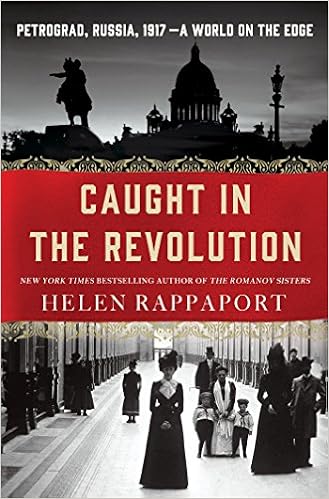
Caught in the Revolution: Petrograd 1917
By Helen Rappaport
Hutchinson
The year 2016, the anteroom to the centenary of the Russian revolutions of 1917, has already brought us several books that, in various ways, speak to the epochal events that brought down a 300-year-old regime and ushered in the utopian experiment of the Soviet Union. Most notable of these are Simon Sebag Montefiore’s engrossing The Romanovs and Historically Inevitable? Turning Points of the Russian Revolution, a collection of essays edited by Tony Brenton, a former British ambassador to Moscow.
In Lenin on the Train, the distinguished historian Catherine Merridale provides one more look at this revolutionary year, retracing what she calls ‘a journey that changed the world’, the eight-day trek by rail and ferry in April 1917 undertaken by Lenin and a small band of Russian exiles from Switzerland across Germany, Sweden and Finland back to Russia. The story has, of course, been told before, most recently by Michael Pearson in The Sealed Train. Although she has not uncovered anything in the archives that substantially alters what we already know about the trip, Merridale brings to her subject a scholar’s deep knowledge and a lively narrative style. It is a work that enlightens as well as entertains.
By the end of 1916, all the participants in the First World War were desperate to find some way to end the bloody stalemate. Anything that might possibly bring some advantage, no matter how unlikely its chance of success, was not to be ignored. Under the direction of Count von Brockdorff-Rantzau, Germany’s ambassador in Copenhagen, peace initiatives had already been forwarded to the Russians. The German foreign ministry spent millions on peace propaganda directed at its enemies, all to no avail. Next, the Germans looked to Russia’s revolutionary parties to help bring tsarism to its knees. They began secretly funnelling funds to them through a network of agents and spies, including the notorious intriguer Alexander Helphand, also known as Parvus. It was Parvus, in January 1915, who was apparently the first to approach the German government offering advice on how their enemy’s enemy could be put to work by encouraging upheaval at home and so speed the end of the war.
Living in European exile, Lenin was stunned when he learned of the fall of the monarchy in March 1917. ‘Staggering!’ he cried to his wife, Nadezhda Krupskaya. ‘Such a surprise! We must get home.’ Here, Lenin’s and the German High Command’s wishes aligned. Lenin was desperate to get back to Russia and he began exploring every possible option for making his way across Europe. When no other country would help with his return, he accepted the German offer, after a fleeting moment of doubt about how this alliance might be interpreted by his countrymen back home.
In a series of meetings with German embassy officials, Lenin presented a list of demands. The most outrageous of these was that while the Russians travelled through Germany their carriages were to have the status of an extraterritorial entity. They were not to be stopped or searched, their documents were not to be checked, and no one was to enter without their permission. So was the myth of the ‘sealed train’ launched, although, as Merridale points out, a good number of people went in and out of the train’s carriages during this dangerous journey. The Germans knew the operation was risky, but in the end they gave it their blessing out of desperation. ‘It was with a sense of awe that they turned upon Russia the most grisly of all weapons,’ Winston Churchill commented. ‘They transported Lenin in a sealed truck like a plague bacillus from Switzerland to Russia.’
Merridale, despite the thinness of the sources, evokes with a novelist’s sensibility the atmosphere on the train. Ever the puritanical tyrant, Lenin forbade partying and banned smoking except in the lone toilet, a decision that angered his fellow passengers. Since fomenting revolution required rested bodies, he placed everyone on a strict sleep schedule. A line of chalk was drawn on the floor of the carriage, demarcating the space of the exiles from that of their German guards; only one member of the party, from a neutral country, was permitted to move between the two zones. As the others waited their turn for a smoke in the lavatory, Lenin toiled away, writing like mad and holding meetings with his colleagues.
Lenin was met by a jubilant crowd upon his arrival at Petrograd’s Finland Station. ‘Apart from peace and bread,’ Merridale writes, ‘the one thing people yearned for most was something new: an end to the old ways, the lies, the government by strangers in expensive suits.’ Lenin told them they had been betrayed, that the revolution had opened ‘a new epoch’ and before them lay ‘the worldwide socialist revolution!’ Merridale correctly notes how ‘his slogans felt like a sudden electric shock … a call to life, a blinding glimpse of futures some had privately begun to doubt’. The masses chose to ignore the fact that Lenin had called not for peace, but rather for an end to the ‘imperialist war’ and the unleashing of a new ‘civil war’ along class lines.
Russia’s Provisional Government tried to discredit Lenin by portraying him as a German agent. The charges have had a long life. In the early 1990s, Dmitri Volkogonov claimed to have found incontrovertible proof in recently declassified Russian archives that the father of the Soviet state had been in the direct pay of the Germans, an accusation that Merridale shows to be baseless, although at the same time she does acknowledge that some of the millions of German marks given to Parvus probably made their way to ‘Lenin’s fighting fund’.
Against the background of war and the collapse of the Romanov regime, treason was the brush used to paint every perceived enemy. In the final years of Nicholas II’s reign, spy mania swept over Russia like a prairie fire. It was this paranoia that gave rise to the notorious Myasoedov affair, when an innocent Russian officer was arrested and executed without any real evidence. It was also this paranoia that led most Russians to believe, again mistakenly, that Grigori Rasputin, the holy man and confidant of the tsar and tsarina, was a German agent and the man responsible for the army’s defeats. Lenin accepted German help, but this made him no more an agent than Georgi Plekhanov, the ‘father of Russian Marxism’, who was sent back to Russia by Great Britain around the same time to agitate on behalf of the Provisional Government in favour of staying in the war. It was not only the Germans who made use of Trojan horses, Merridale rightly notes.
At base, the arguments over Lenin centre on the question of the legitimacy of the October Revolution, for if Lenin was working on behalf of Russia’s enemy, then the Revolution itself becomes a foreign conspiracy, one brought about with the aid of a fifth column. Now, a century later, the absurdity of such a notion is beyond doubt, but during the fog of revolution, when reliable information was in short supply and all of Petrograd survived on a diet of rumour and gossip, no one could be sure of anything.
..............
A donor-conceived Belgian woman visits a fair for same-sex couples who want to be dads
A visit to a baby market in Brussels
For the second time around a surrogacy fair organised by the American company Men Having Babies landed on Belgian soil. This time it took place in a slightly more upscale venue. The ground floor at The Brussels Hilton became a stage where 220 potential customers from 12 European countries were welcomed.
Like last year, I was present. Me: the first in our generation to provide adults with a semi-biological child. It was the start of a lucrative business when fertility doctors discovered that the techniques used on a pig farm could also be useful for infertile heterosexual couples.
From the 1950s Belgian wombs were being filled with the sperm of unknown men. Fertility techniques improved and not much later they tapped into new target groups: single women and lesbian couples.
Branding unwanted childlessness as discrimination and injustice, several branches of the LGBT community are lobbying for gay men and transgender women to have biological children of their own.
Last Sunday almost everything was on offer: interpreters, gadgets, price lists, different formulas, the dos and the don’ts… But most of all, straight-to-your-heart-and-into-our-wallet sales pitches from companies which are able to connect anyone directly with eggs, surrogacy agencies and lawyers to make “a dream come true”. Lawyers handed out the metaphorical road map with instructions on how to by-pass laws to get your purchased child(ren) “legally” in your own country.
Towards an ethical framework
This year Men Having Babies also presented an “ethical framework” to convince opponents of their sincere and honest intentions. They claim to be a non-profit organization aiming to provide tools and means for gay men to pursue their right to have a biological family. The fact that their biggest sponsors happened to be the very fertility centers and law firms that pitched to the 220 attendees wasn’t viewed as a conflict of interest.
Surrogacy was described as “the act of a woman, altruistic by nature, gestating a child for another individual or couple, with the intent to give the child to the intended parents at birth”.
I have a very different perspective. I would describe it as the outsourcing of a personalized pregnancy that aims the trading/adoption of a donor-conceived child to those who ordered it whilst paying a fee for expenses.
New terms were launched to keep the transactions as business-like as possible: the surrogate mother was called “a carrier”, the egg donor “a genetic material contributor”. Some agencies also offered a money-back guarantees(no kidding) and “Multiple Cycle Package” deals.
Several times speakers advised against adoption. They said that nowadays there are not many young children to adopt and the probability that the mother may decide to keep “your” child is too great a risk. Surrogacy, once again, brought salvation.
Speakers strongly advised the participants to use eggs from a woman other than the surrogate, because the birth mother will then be more likely to give up the baby.
An enforceable 50-page contract also offers reassurance that you can take the child home with you after it is born. The contract even allows payments to stop if the surrogate does not comply with the terms of the contract. I must also mention that many contracts have a non-disclosure clause: they prohibit women from speaking publicly about any malpractice they endured.
A lot of time and attention was spent on the topic of conceiving as healthy a child as possible. Gender selection is included in this “service”. My consternation was huge when a fertility doctor asked the audience who would chose to abort a child with a defect. Most hands went in the air. Just for the record: abortion can also be enforced by contract.
Belgian hypocrisy
Apart from “I want my child to be as healthy and perfect as possible”, discussion of the welfare of the child was – as it is in Belgium – limited to the legal uncertainty that is created when there is a legal conflict between genetic lineage and legal parenthood. Only twice (and very briefly) were the right of the child to knowledge of his or her ancestry and identity mentioned. But these were immediately countered by economic and practical arguments.
Once again certain Belgian politicians have sought the media limelight to express their personal disgust regarding this event.
................
Readmore: www.mercatornet.com
Les prêtres de la modernité, qui déclarent une forme de guerre au silence, ont perdu la bataille
La véritable urgence : retrouver le sens de Dieu
Source: lesalonbeige.blogs.com
Après le succès de Dieu ou rien (Fayard, 2015), le cardinal Robert Sarah publie début octobre un nouveau livre avec Nicolas Diat : La Force du silence. Il est interrogé dans La Nef de ce mois. Extraits :

"[...] Il est temps de retrouver l'ordre véritable des priorités. Il est temps de remettre Dieu au centre de nos préoccupations, au centre de notre agir et de notre vie, à la seule place qu’Il doit occuper. Ainsi, notre cheminement chrétien pourra graviter autour de ce Roc, se structurer dans la lumière de la foi et se nourrir dans la prière, qui est un moment de rencontre silencieuse et intime où l’homme se tient face à face avec Dieu pour l’adorer et lui exprimer son amour filial.
Ne nous trompons pas. La véritable urgence est ici : retrouver le sens de Dieu.Or le Père ne se laisse approcher que dans le silence. Ce dont l'Église a le plus besoin aujourd'hui, ce n'est pas d'une réforme administrative, d'un programme pastoral de plus, d’un changement structurel. Le programme existe déjà : c’est celui de toujours, tiré de l’Evangile et de la tradition vivante. Il est centré sur le Christ lui-même que nous devons connaître, aimer, imiter, pour vivre en Lui et par Lui, transformer notre monde qui se dégrade car les hommes vivent comme si Dieu n’existait pas. Comme prêtre, comme pasteur, comme Préfet, comme Cardinal, ma priorité est de dire que Dieu seul peut combler le cœur de l'homme.
Je crois que nous sommes victimes de la superficialité, de l’égoïsme et de l'esprit mondain que répand la société médiatique. Nous nous perdons dans des luttes d'influences, des conflits de personnes, dans un activisme narcissique et vain. Nous nous gonflons d’orgueil, de prétention, prisonnier d’une volonté de puissance. Pour des titres, des charges professionnelles ou ecclésiastiques, nous acceptons de viles compromissions. Mais tout cela passe comme la fumée. Dans mon nouveau livre, j'ai voulu inviter les chrétiens et les hommes de bonne volonté à entrer dans le silence ; sans lui, nous sommes dans l'illusion. La seule réalité qui mérite notre attention, c'est Dieu lui-même, et Dieu est silencieux. Il attend notre silence pour se révéler.
Retrouver le sens du silence est donc une priorité, une nécessité, une urgence. Le silence est plus important que toute autre œuvre humaine. Car il exprime Dieu. La véritable révolution vient du silence, elle nous conduit vers Dieu et les autres pour nous mettre humblement à leur service. [...]
Dans le monde moderne, l'homme silencieux devient celui qui ne sait pas se défendre. Il est un « sous-homme » face au soi-disant fort qui écrase et noie l'autre dans les flots de ses discours. L'homme silencieux est un homme en trop. C'est la raison profonde des crimes abominables ou du mépris et de la haine des modernes contre ces êtres silencieux que sont les enfants non nés, les malades ou les personnes en fin de vie. Ces hommes sont les prophètes magnifiques du silence. Avec eux, je ne crains pas d'affirmer que les prêtres de la modernité, qui déclarent une forme de guerre au silence, ont perdu la bataille. Car nous pouvons rester silencieux au milieu des plus grands fatras, des agitations abjectes, au milieu des vacarmes et des hurlements de ces machines infernales qui invitent à l'activisme en nous arrachant à toute dimension transcendante et à toute vie intérieure. [...]
La liturgie est malade. Le symptôme le plus frappant de cette maladie est l'omniprésence du micro. Il est devenu si indispensable qu'on se demande comment on a pu célébrer avant son invention ! Le bruit du dehors, et nos propres bruits intérieurs, nous rendent étrangers à nous-mêmes. Dans le bruit, l’homme ne peut que déchoir dans la banalité : nous sommes superficiels dans ce que nous disons, nous prononçons des discours creux, où l’on parle et parle encore… jusqu’à ce qu’on trouve quelque chose à dire, une sorte de « mélimélo » irresponsable fait de blagues et de mots qui tuent. Nous sommes superficiels aussi dans ce que nous faisons : nous vivons dans une banalité, prétendument logique et morale, sans rien y trouver d’anormal. Nous sortons souvent de nos liturgies bruyantes et superficielles sans y avoir rencontré Dieu et la paix intérieure qu’il veut nous offrir.
"The safest road to hell is the gradual one — the gentle slope, soft underfoot, without sudden turnings, without milestones, without signposts." - C.S. Lewis
| ||
 | ||

| |||||||||||||||||||||||||||||||||||||||||||||||||||||||||||||||||||||
 |
Interpreting the Present Time - Cardinal Robert Sarah - from God or Nothing, A Conversation on Faith
A Godless society, which considers my spiritual questions a dead letter, masks the emptiness of its materialism by killing time so as better to forget eternity. | |
 |
Jubilee Year of Mercy: Mercy and Memories - Father Peter John Cameron, O.P. -Magnificat
Despite the faithful life a man may be living now, the memories of his past sinful life can still hold him back, still hold him hostage. | |
 |
How the Church Has Changed the World: Mother of Universities - Anthony Esolen -Magnificat
Yes, the university was a Medieval guild, born from the bosom of the Church. | |
 |
How kids can benefit from boredom - Teresa Belton - MercatorNet
Parents often feel guilty if children complain of boredom. But it's actually more constructive to see boredom as an opportunity rather than a deficit. | |
 |
Can You Trust the Press? - Judith Miller - Prager University
Judith Miller, Pulitzer Prize-winning former reporter for the New York Times, explains why Americans' trust in the news media has fallen, and why that matters. | |
 |
Universities' war against truth - Roger Scruton - The Spectator
Having beliefs and expressing them is no longer tolerated and the contagion is spreading. | |
 |
Benedict XVI's "Final Conversations" - Robert Royal - The Catholic Thing
Pope Emeritus Benedict XVI's latest — and seemingly last — book, Final Conversations, appeared in Rome on Friday. | |
 |
We would not be here - Father George W. Rutler - From the Pastor
Our faith is based, not on abstract speculation, but on historical events. | |
Editorials of Interest
Pope Francis: Diplomacy and the Role of Religions - Monday Vatican
With Pope Francis, the Vatican secretary of state, Pietro Parolin, is on an offensive to prove that religion and religious organizations have key roles to play in affecting international justice, which is important since too many think "religion" equals "ISIS."
Pope Francis: Feeling hopeless? Don't drink. Pray! - CNA
Feelings of spiritual desolation, or a lack of will to live, should be combated with prayer, not with sleeping pills or alcohol — things that only distract us from the problem.
Pope to journalists: truth and respect for human dignity - Vatican Radio
Pope Francis on Thursday met with the Italian National Council of the Order of Journalists, telling them that truth, professionalism and respect for human dignity were essential elements in their work.
Amoris Laetitia: A Tremendous Gift for Church and Families in the US - USCCB
A request from the Office of the Synod of Bishops for a report on the reception and implementation ofAmoris Laetitia in the United States has provided an opportunity to reflect on the good work that is already underway, as well as envisioned future plans to continue absorbing and unpacking this foundational document.
Bishop Olmsted: Pope Has Not Changed Catholic Practice on Communion for Divorced and Remarried - NC Register
"Pope Francis specifically calls those in this situation 'to seek the grace of conversion,'" the Phoenix bishop said, citing the 78th paragraph of the exhortation.
Has Pope Francis Failed? - NY Times
New survey findings from Georgetown's Center for Applied Research in the Apostolate suggest that there has been no Francis effect: in 2008, 23% of American Catholics attended Mass each week. Eight years later, weekly Mass attendance has held steady or marginally declined, at 22%.
Cardinal Joseph Ratzinger: The Contemplation of Beauty - Pontifex
The beautiful wounds, but this is exactly how it summons man to his final destiny.
10 Nuns reveal the meaning of life - Aleteia
When I asked these religious sisters the big question, what I learned was pretty amazing.
On God and heaven, Americans are all over the map - Religion News
"Contradictory and incompatible beliefs are OK for most people," said LifeWay Research Executive Director Scott McConnell. For example, nearly two-thirds of Americans said Jesus is God. But then, more than half also said Jesus was a creature created by God.
That Faith Counts study: Religion is bigger than Facebook, Google and Apple combined - Get Religion
The annual revenues of faith-based enterprises — not just churches but hospitals, schools, charities and even gospel musicians and halal food makers — is more than $378 billion a year.
Another Catholic priest has been kidnapped in Mexico - CNA
Fr. Jose Alfredo Lopez Guillen was abducted the same day that authorities found the lifeless bodies of previously-kidnapped Fathers Alejo Nabor Jimenez Juarez and Jose Alfredo Juarez de la Cruz.
Brock Turner, Moral Outrage, and Natural Law - The Public Discourse
In spite of its weak philosophical foundation, our culture has deep-seated moral instincts and political commitments. These make it possible to begin the recovery of sound moral and political thought.
Dutch cardinal warns Canadian bishops about 'slippery slope' of euthanasia - Catholic Herald
"When you leave the door ajar, it will always open more."
Elizabeth Vargas' alcohol confession brings painful feelings to the forefront - For Her
The news anchor's recent admission prompts one writer's personal reflection on why embracing the pain is a good and healing gift we owe to ourselves and our mental health.
St. Padre Pio's 5 Point Rule of Life - The Catholic Gentleman
Pio of Pietrelcina was both a mystic and a performer of many miracles — and he died in 1968, only 46 years ago.
The Wild of the Mass - First Things
"If it's a symbol, the hell with it," said Flannery O'Connor about the Eucharist, and who would argue with Flannery O'Connor? Not me.
What do you say to a homeless person? Advice from Catholic urban missionaries - CNA
"One of our friends on the street told us he went four months without hearing his own name. Ask the person's name and remember it."
Ancient Wisdom in Barren Times - The Public Discourse
Far too many of us, even the most tender and gentle, have absorbed the hypothesis that a refusal of life is the condition of love.
Delight in the Good - First Things
On the challenge of entertainment.
“YOU WERE NOT MADE FOR COMFORT; YOU WERE MADE FOR GREATNESS” – POPE BENEDICT
A call to battle
Into the Breach
BE NOT AFRAID!
Along with reading and studying the document, engaging personally and as groups of men in the spiritual battle and struggle for virtue and excellence, and developing the interior life of prayer needed to live fully as a Christian man, Bishop Olmsted is urging a MOVEMENT in Christian engagement on several fronts—dealing with cultural breaches that are in great need of courageous engagement.
This list is not exhaustive, for much needs to be done, but these would be an excellent beginning:
A Movement of PARISH EVANGELIZATION OF MEN (ideas include)
A Movement of PARISH EVANGELIZATION OF MEN (ideas include)
1. This should include quarterly or monthly larger gatherings of men with Pastor or other priest or deacon, also led by well-formed laymen for evangelization and formation (key areas needed for formation include: the Mass, the Catechism, Apologetics, Virtue, etc.)
2. Encouraging of small fellowship groups of Catholic men to build friendships
3. An annual retreat for men of the parish
A Renewal of Masculine EDUCATION: Education literally means “to lead out”—an educator leads a person out of self-absorption and mediocrity into a fuller understanding of Truth, Goodness and Beauty as well as technical competence and skill. There is now a particular failure in postmodern Western culture to lead boys to truly virtuous, to be “Men for Others”. Well-developed father and son formation in the Faith and in other areas of knowledge as well as outreach to young men and boys whose fathers are absent are crucial needs at this time.
A Renewal of the ARTS: There is a great need to develop schools of formation and community for Christian artists who truly seek to bring beauty to the forefront, whose gifts are honed and strengthened and humbly placed at the service of the Lord and who can make the beauty of the male/female distinction apparent to all, without the shortcuts often taken in poor art.
A Movement in PHILOSOPHY/THEOLOGY toward an adequate explanation of Sexual Complementarity: Now that the “gender ideology” has the world asking “Is male/female nature even an important category?” and this is impacting Western culture so devastatingly, the Church’s sons and daughters with the call to the intellectual battle must respond. A serious engagement with the meaning of sexual complementarity and development of our understanding of both the feminine and masculine genius must be engaged. Falling into “forms of machismo” as Pope Francis says, must be avoided in this important work of thought. A thorough review of the Scriptures, the Tradition and true scientific discovery will be necessary. Yet it is essential that this work is done, and where it is being done already, thank you. Have the courage to continue and engage!
- We’re here to offer encouragement and a challenge.
- A calling forth to every willing man: priests and deacons,husbands, fathers and sons, grandfathers and widowers, young men in preparation for your vocation.
- Each and every man.
- Step Into the Breach. Join us in the battle.
Read more: intothebreach.org
Economists have invaded political science . . . reducing political questions to economic ones
Aristotle on Economics and the Flourishing Life
BY HARVEY C. MANSFIELD
Harvard University and the Hoover Institution
To introduce this large topic, it is fitting to consider Aristotle, for centuries “the master of those who know” (as Dante called him). By contrast to our thinking, Aristotle wrote comprehensively on both economics and the flourishing life. Modern economics makes its way without study of the “flourishing life,” which is one translation of what Aristotle meant by happiness. For him, as for common sense, happiness is the goal of ethics and politics, and ultimately of economics. At present, however, economics contents itself with the “pursuit of happiness” (to borrow from the Declaration of Independence), a catchall category that specifies at great length how to pursue but hardly at all what to pursue.
If we follow Aristotle’s method of beginning from what is familiar, we must begin from modern economics, which is more familiar to us than Aristotle. Every college student has taken, or should have taken, Economics 101, and those who have been deprived of this advantage have to learn what is taught in that course, perhaps more cheaply, perhaps not, in the School of Hard Knocks. Whether the study of economics is worth its cost is an example of a typical economic calculation, for economics is about calculation. A calculation is a deliberation that focuses on a number, a “metric,” of more, of a greater quantity. It avoids the question of how much more is needed before one can decide that one can stop acquiring and turn to enjoyment. Originally—and this is in Aristotle as well as in the founders of modern economics—economics supposed that it could define needs or necessities as opposed to surplus or superfluities. But necessities have a way of expanding from survival to comfort and from comfort to perfect assurance, so that it seems safer, and scientifically more exact, to consider them infinite and thus decline to define them.
Aristotle maintains that virtue is the core of happiness
Economics becomes the science of getting more without ever saying how much more. It is because of its exactness that science requires this vagueness. Economics must either be exact or fall silent; it disdains and rejects the possibility of an inexact statement that is merely probable and better than nothing. It may attempt to evade the difficulty by defining “probability” exactly. The result would be either a vague definition of exact or an exact definition of vague— which leaves the common sense “probable” in charge. So the science of more, of “growth,” drops the utilitarian posture that requires a definition of utility—possibly contestable—and turns to “preferences” that are admittedly quite subjective. Thus does the objectivity of economics require that it surrender totally to human subjectivity. And as the measuring of preferences becomes increasingly sophisticated, which means increasingly mathematical, economics becomes increasingly vague as to its end and continually further from defining the “flourishing life.”
.......................
Read more: www.aei.org
Suscribirse a:
Entradas (Atom)